Client problem
The client needed a more trustworthy way to distribute promotional rewards to real people rather than unverified accounts or automated traffic.
Case study · Rolu Labs · 2024–present
My work at Rolu Labs has involved sitting close to a client problem, finding the constraint that matters, and helping move a product from an ambiguous request into something people can use. These four engagements show that pattern across consumer, advertising, commerce, and social systems.
01
The technology changed from engagement to engagement. The working method stayed consistent.
02
World Network · verified-human rewards
The client needed a more trustworthy way to distribute promotional rewards to real people rather than unverified accounts or automated traffic.
We shaped a simple game loop: people played, collected tokens, and redeemed rewards. World ID supplied proof of personhood; the product work connected that primitive to an experience people could understand and use.
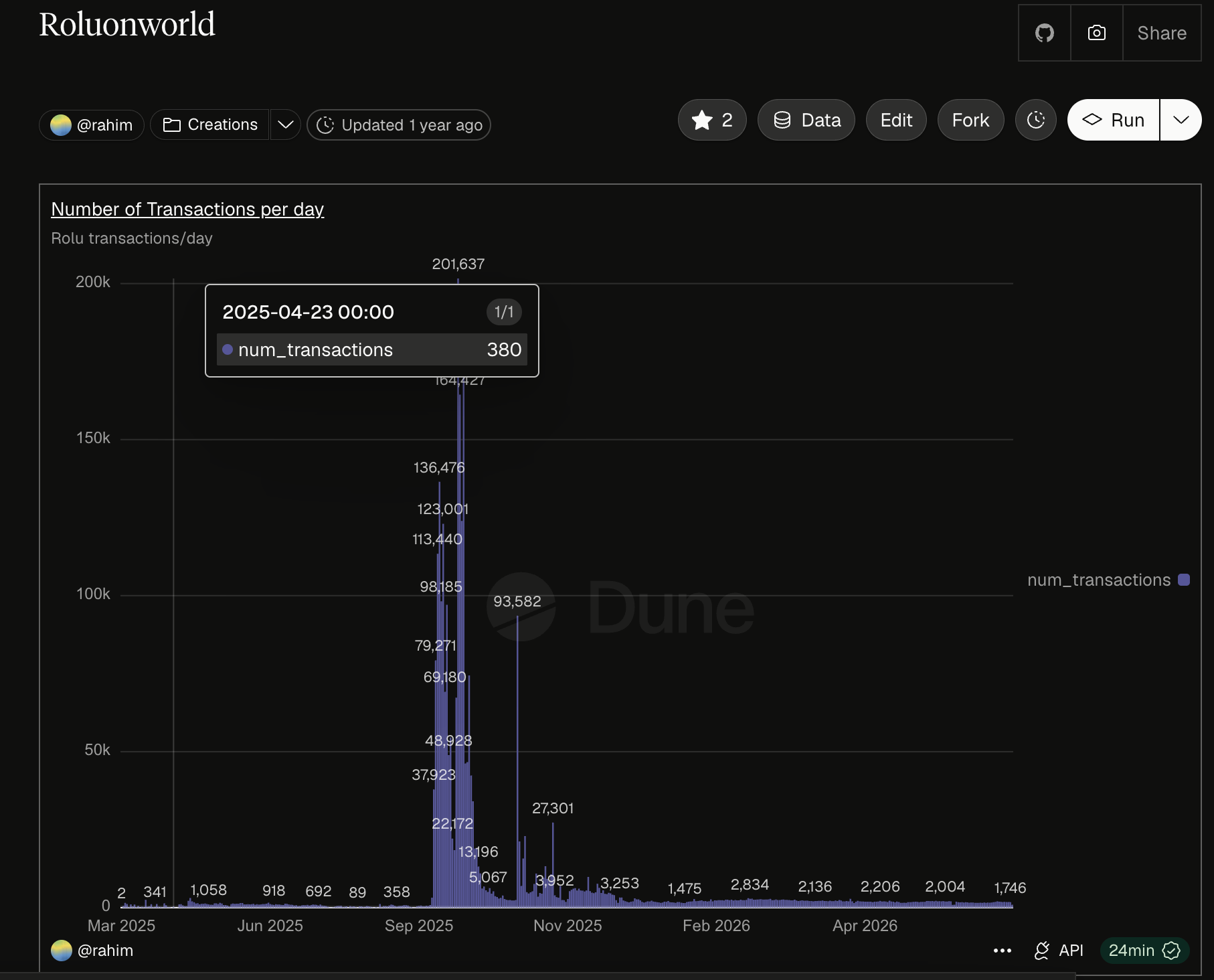
Rolu's first product reached more than 250,000 users and recorded a peak of 201,637 token transactions in a day.
03
Unity 3D · rewarded advertising
The same client wanted a better experience for people watching advertising in exchange for tokens. A passive ad surface did not create enough interaction on its own.
After market research and product brainstorming, we built an endless-runner game in Unity 3D. Coin collection and rewarded advertising became part of one continuous interaction rather than separate tasks.
Runner turned a campaign requirement into a shippable game mechanic and gave the team a reusable format for testing more engaging rewarded-ad experiences.
04
Shopify · commerce operations
A growing ecommerce business had accumulated friction across its Shopify storefront and internal operating workflows.
We worked with the client to identify conversion and operational bottlenecks, prioritize the highest-leverage fixes, and improve the systems supporting continued growth.
During the engagement period, the business grew from approximately $2M to more than $10M in annual recurring revenue in under two years. That growth was company-wide; our work focused on removing product and operating constraints along the way.
05
World ID · verified-human social network
Conventional social feeds give people little reliable information about whether an account represents a unique human or an automated identity.
We designed a social network inspired by familiar timeline products while making proof of personhood a first-class part of the experience.
Orbit demonstrated a practical social primitive: a user could see whether the person behind an account had verified as a unique human without requiring the product to expose their real-world identity.
06
Product evidence · Rolu
The dashboard and product captures below document the marketplace’s transaction activity and examples of the branded game experiences created around its core play-and-reward loop. The Runner recording shows how that rewarded interaction translated into a Unity 3D endless-runner experience.
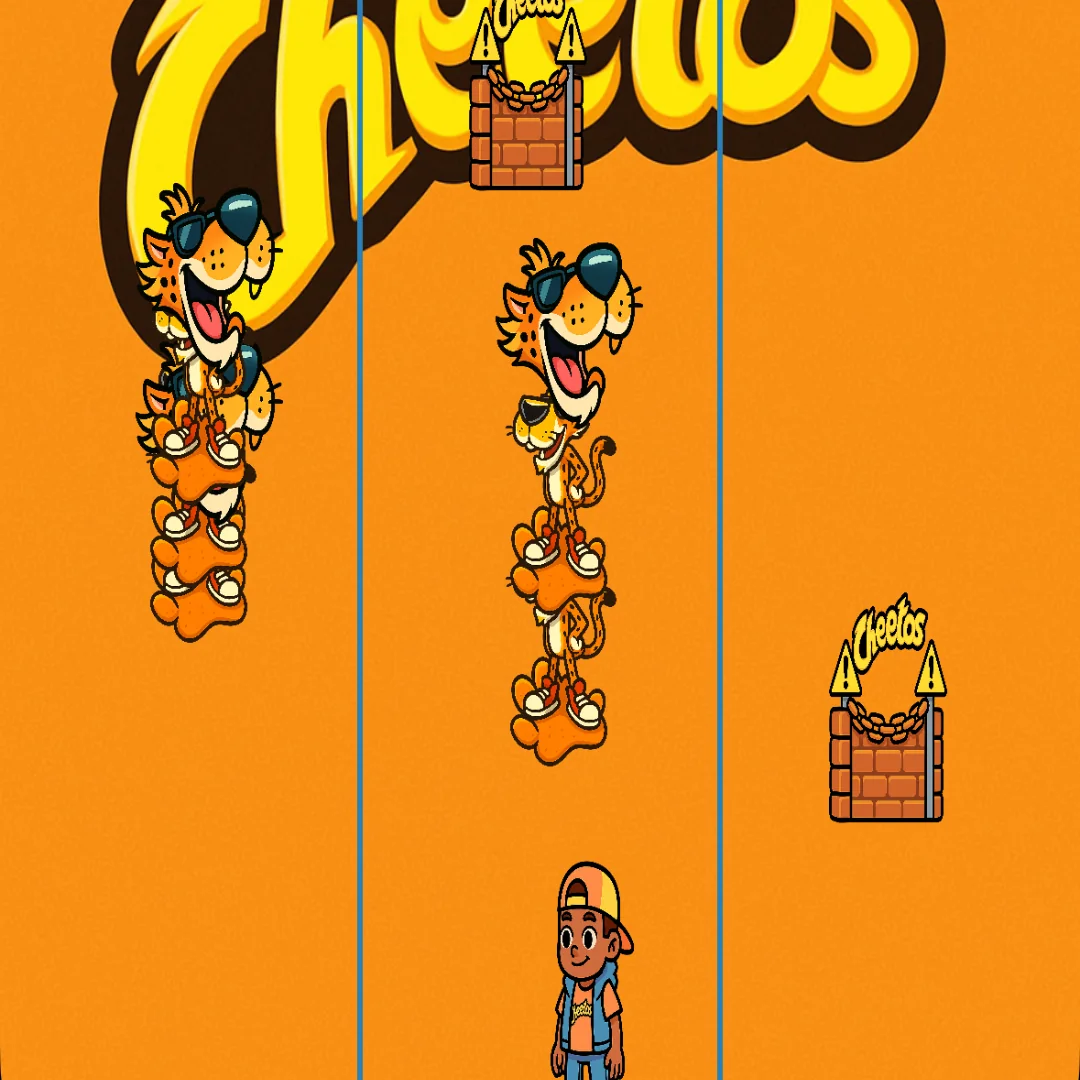
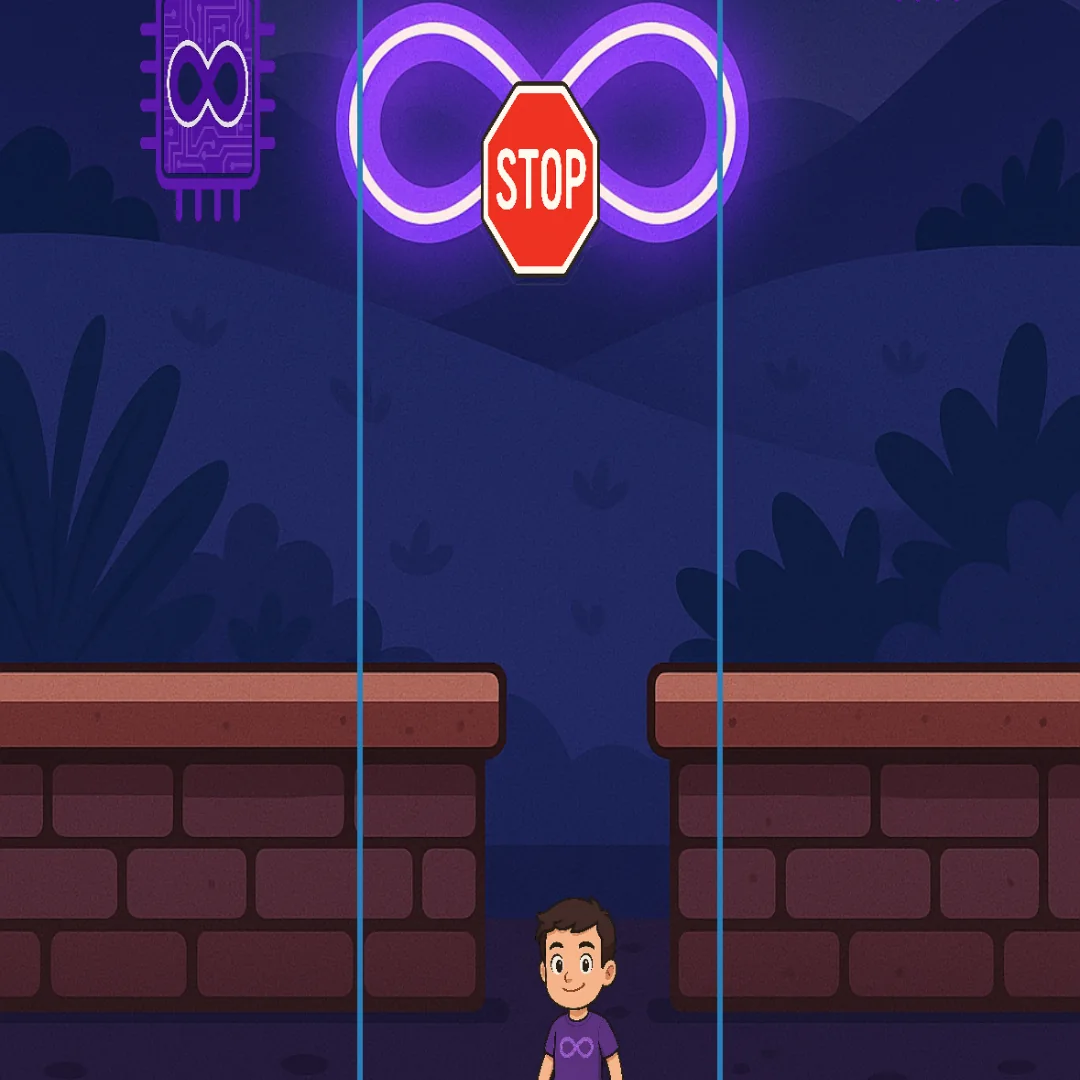
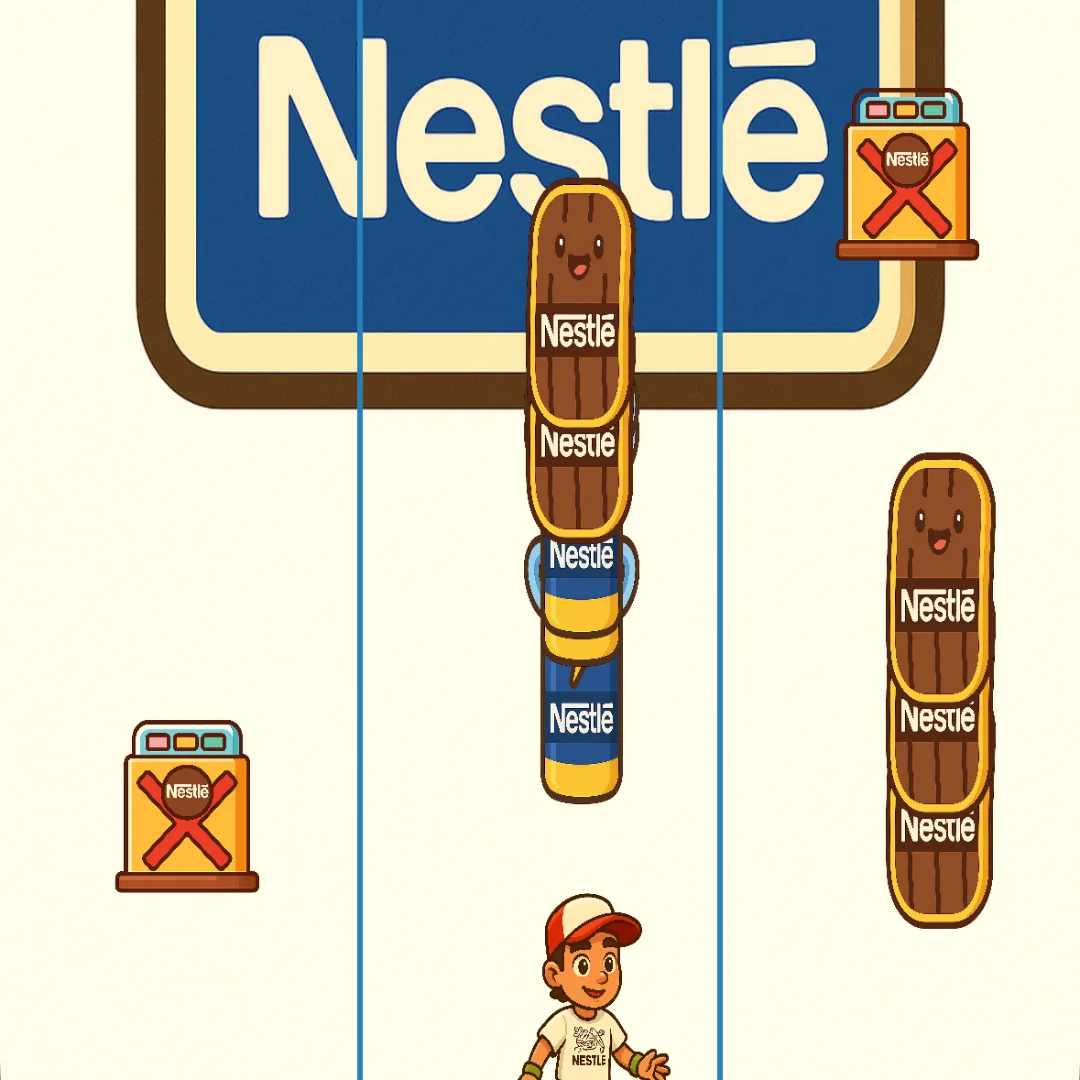
Runner demo · Unity 3D
The 28-second recording shows the shipped interaction: a player runs through a three-lane environment, collects coins, tracks distance, and avoids obstacles while the rewarded experience remains part of the game loop.
07
The common thread is ownership at the boundary between a customer and a technical team. The work required discovery, product judgment, implementation fluency, and iteration against a real operating outcome—not only a specification handed off to someone else.
Work directly from the client’s business and user constraint.
Move across World ID, token systems, Unity, Shopify, and product analytics.
Stay through launch and iteration, then use adoption or operating results to guide what comes next.